
See the transformative changes unfold.
Providing a lasting impact in a sustainable way for people, place, plants, pollinators.
Identity and destination
‘Statues in the Square’
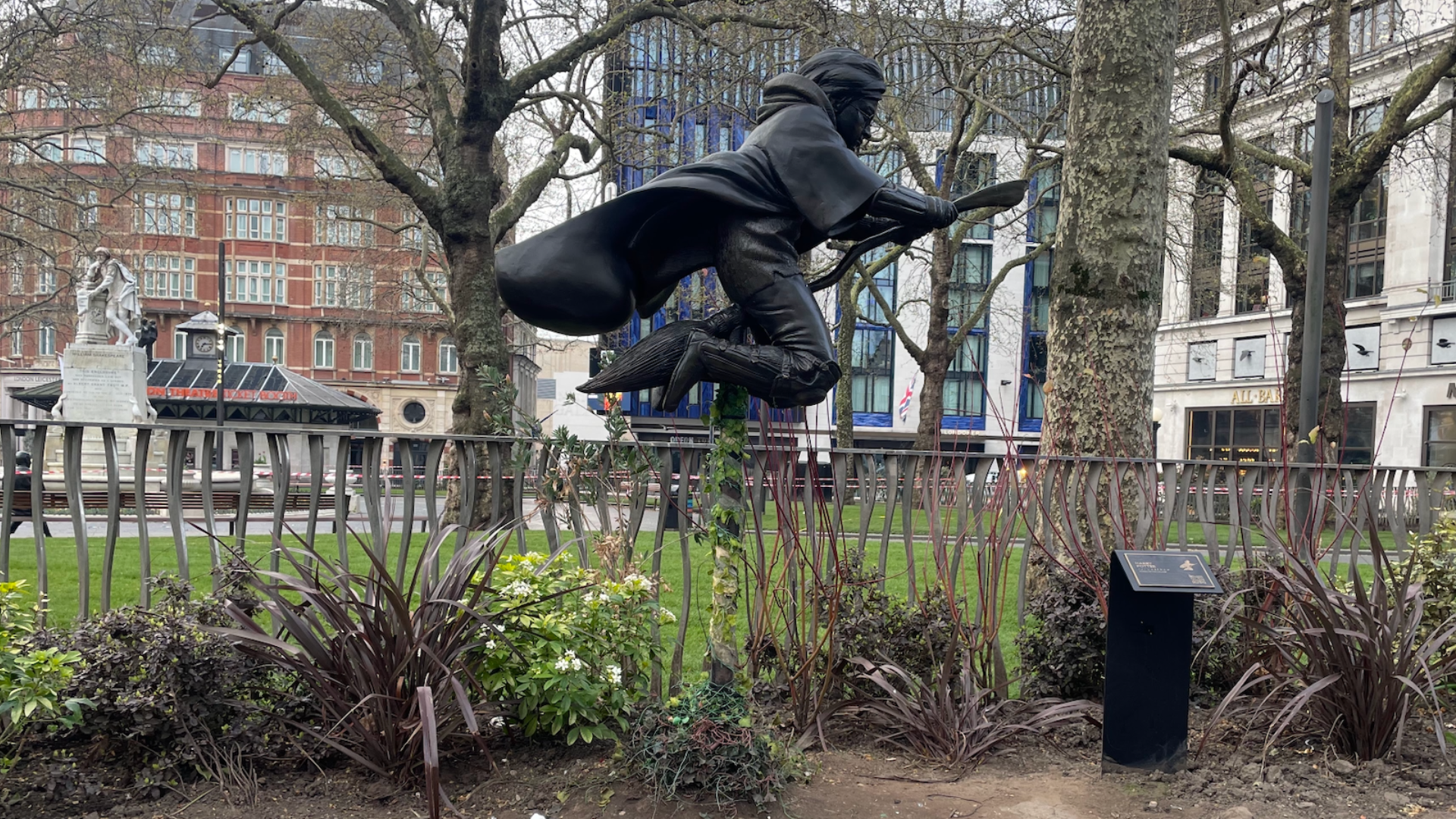
Before promotional planting took place around the Harry Potter statue in Leicester Square.
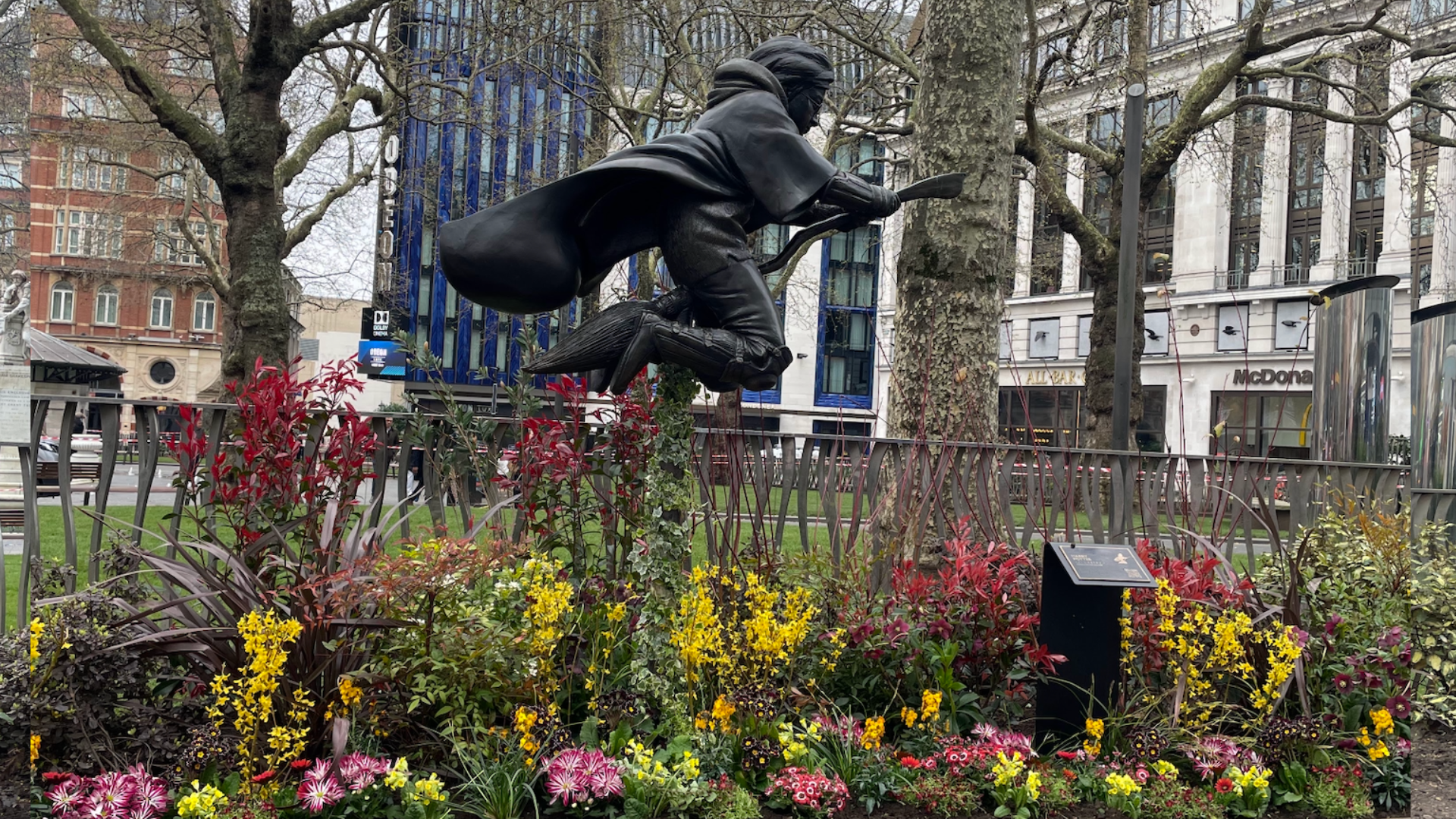
The promotional planting took inspiration from the colours in Gryffindor (scarlot and gold) which was Harry Potter's first true home.

We carefully selected plants that were available at the time, to mirror the colour palette.
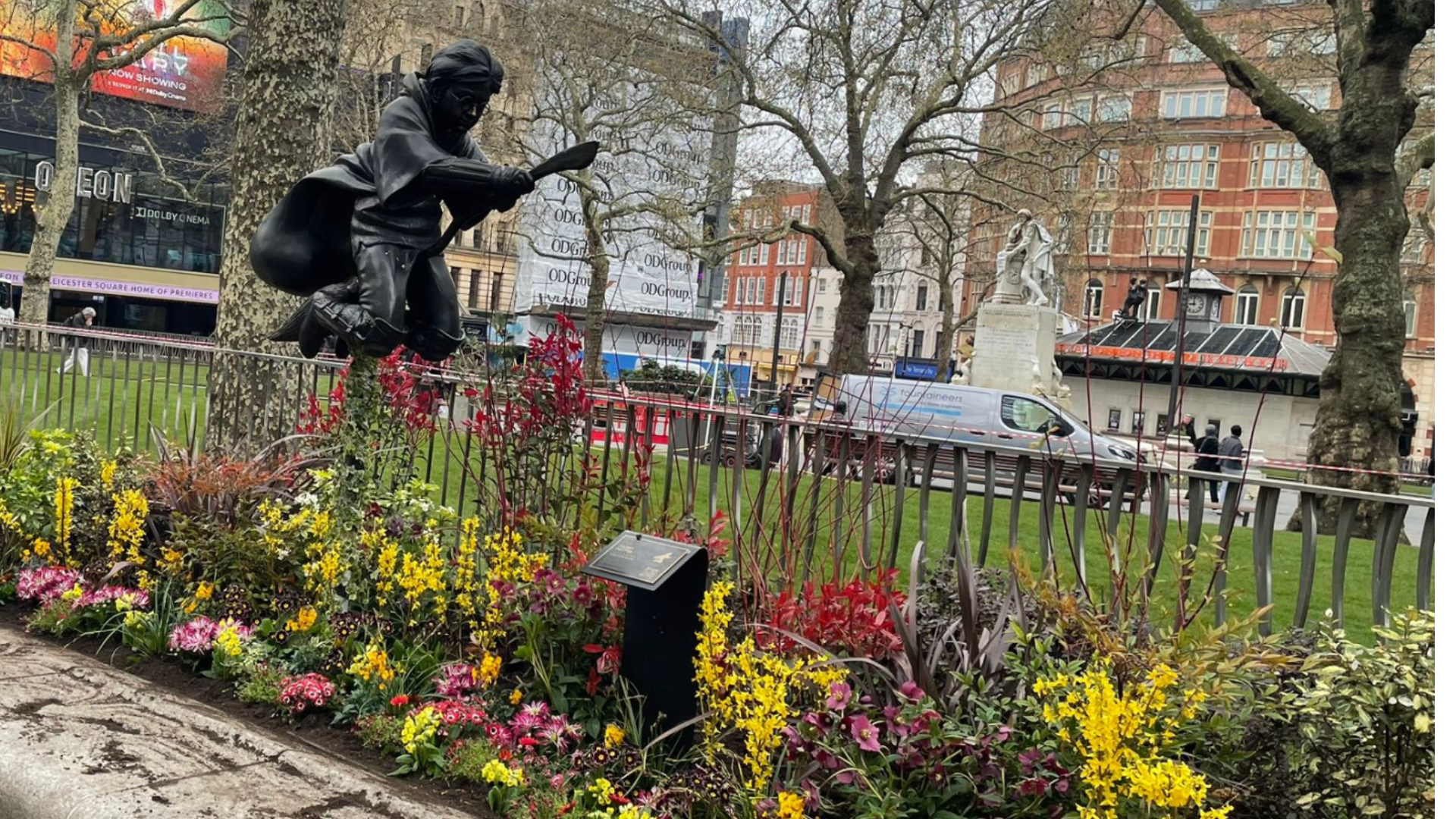
The scarlot and gold colours taken from Gryffindor can be see in full bloom and represent the values of Gryffindor – bravery, courage, nerve and chilvalry.
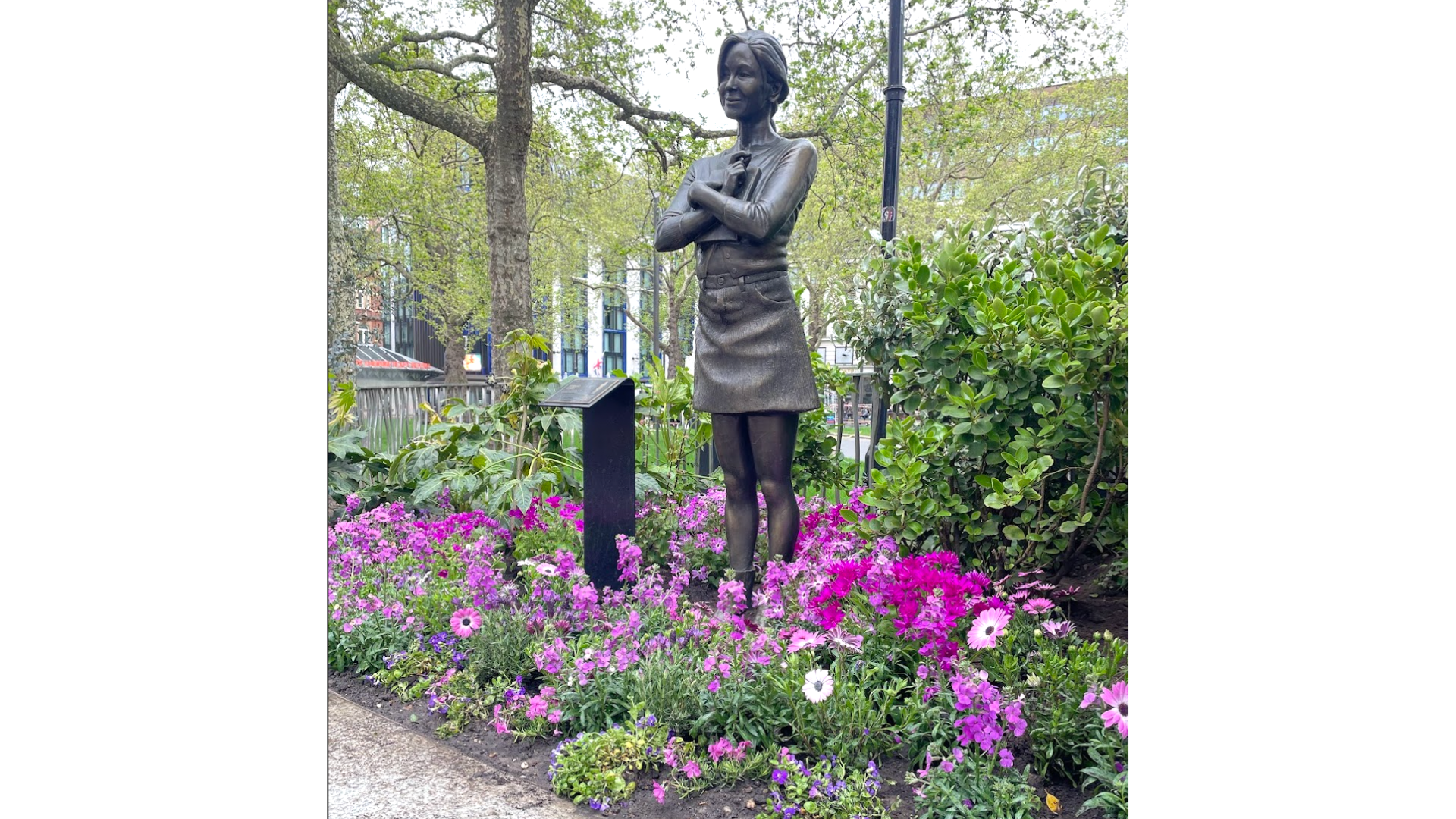
We designed the promotional planting for the Bridget Jones statue around a pink and purple colour palette to visually reflect her charm of femininity, romantic optimism and delightfully messy.
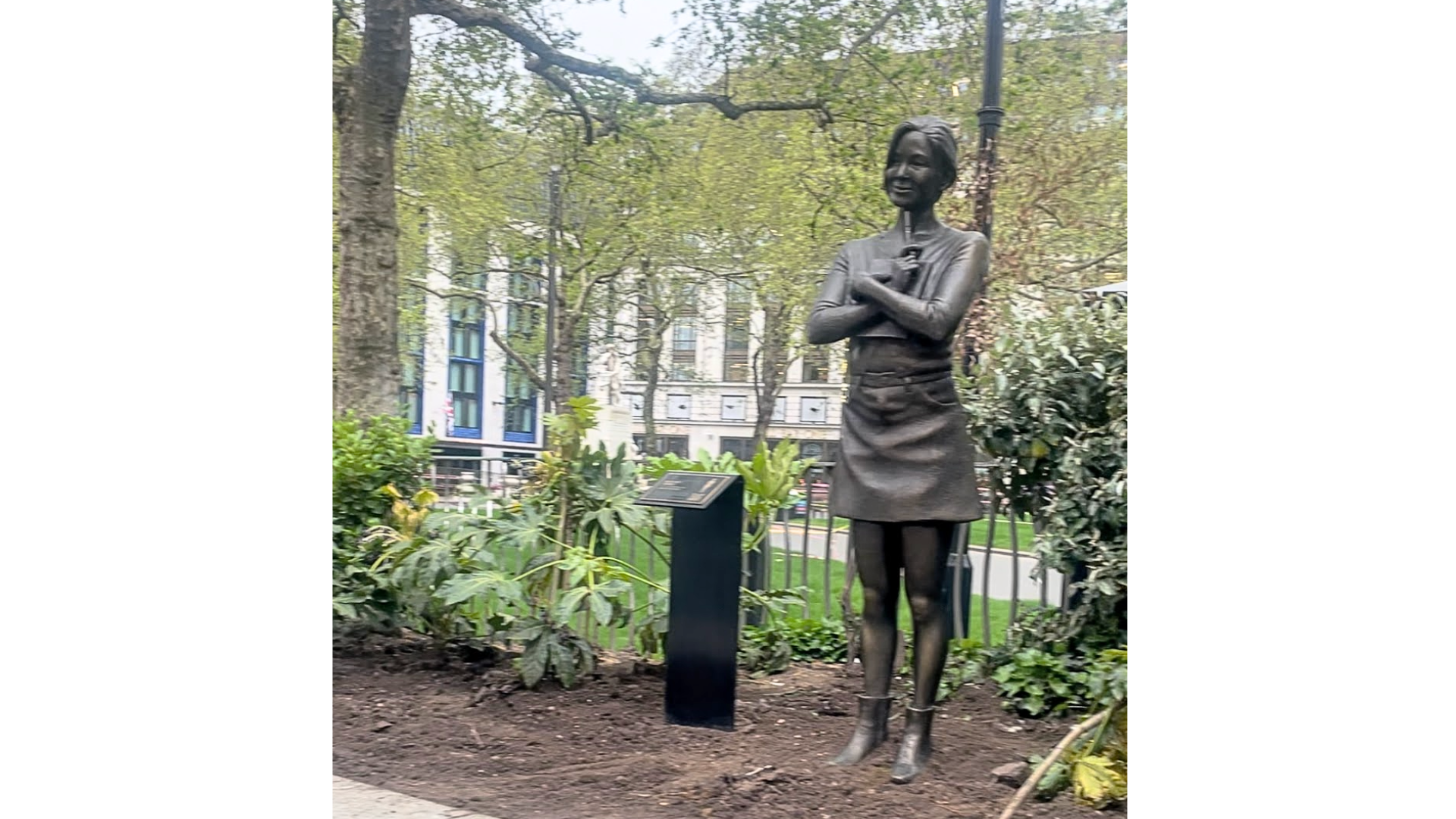
Before planting took place and Bridget Jones had been moved to her new home within Leicester Square.
A sensory roof terrace
Sainsbury Wellcome Centre
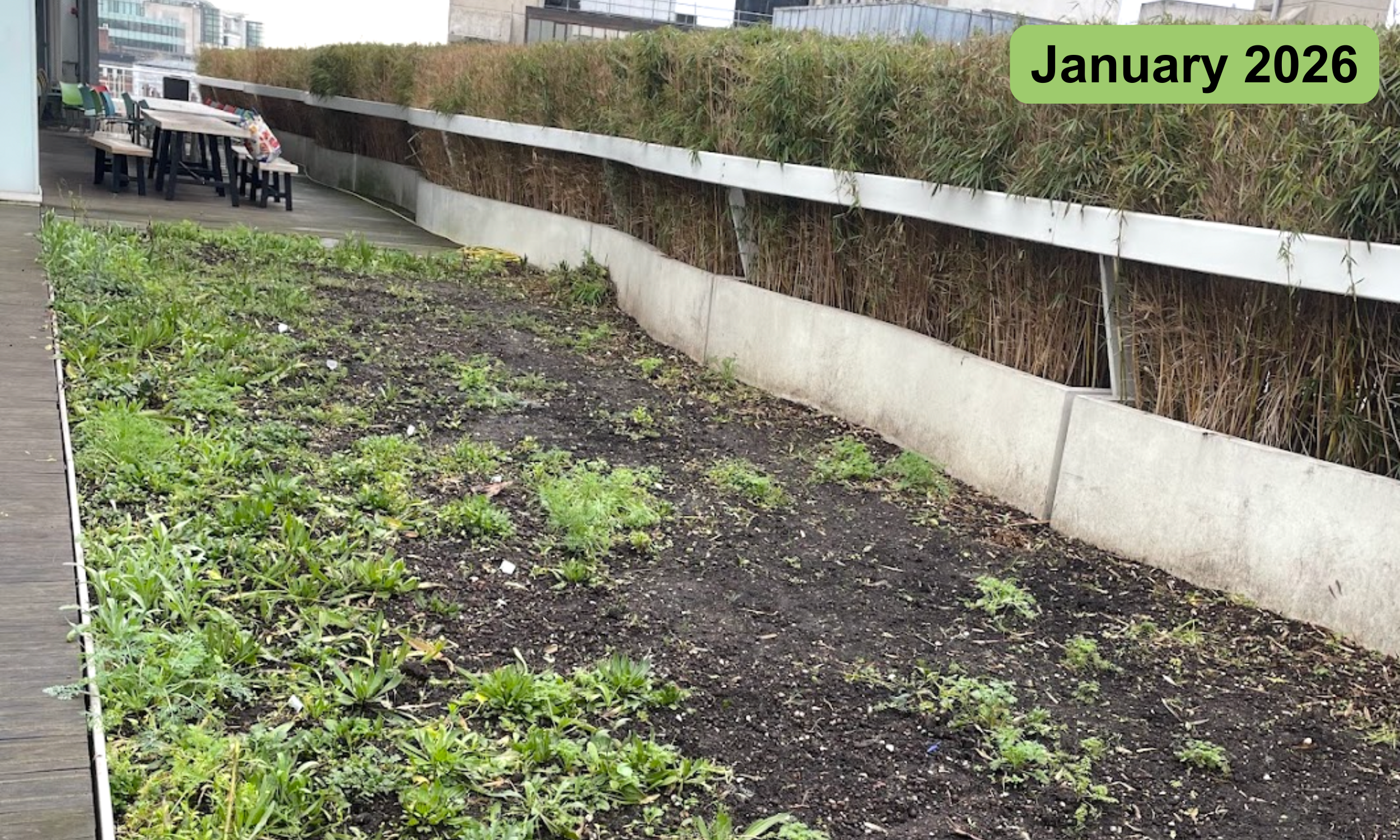
In January, the ox-eye daisies and grasses were moved to the front of the bed, making space for architectural plants to be added later in the year.

1,900 spring bulbs come through including daffodils and tulips. They accompany the vibrant orange Canadian poppies.

The ox-eye daisies and cornflowers like their new position at the front of the bed.

As the wild flowers die back, some are trimmed, some are left to feed the birds and bugs, and more pollinating plants are added such as rudbeckias, echinaceas and agastache.

The sunflowers start to flower at the back of the bed and the verbena spreads and keeps on flowering. (The bee loves it!)
The wellbeing boost
How to reconnect with nature
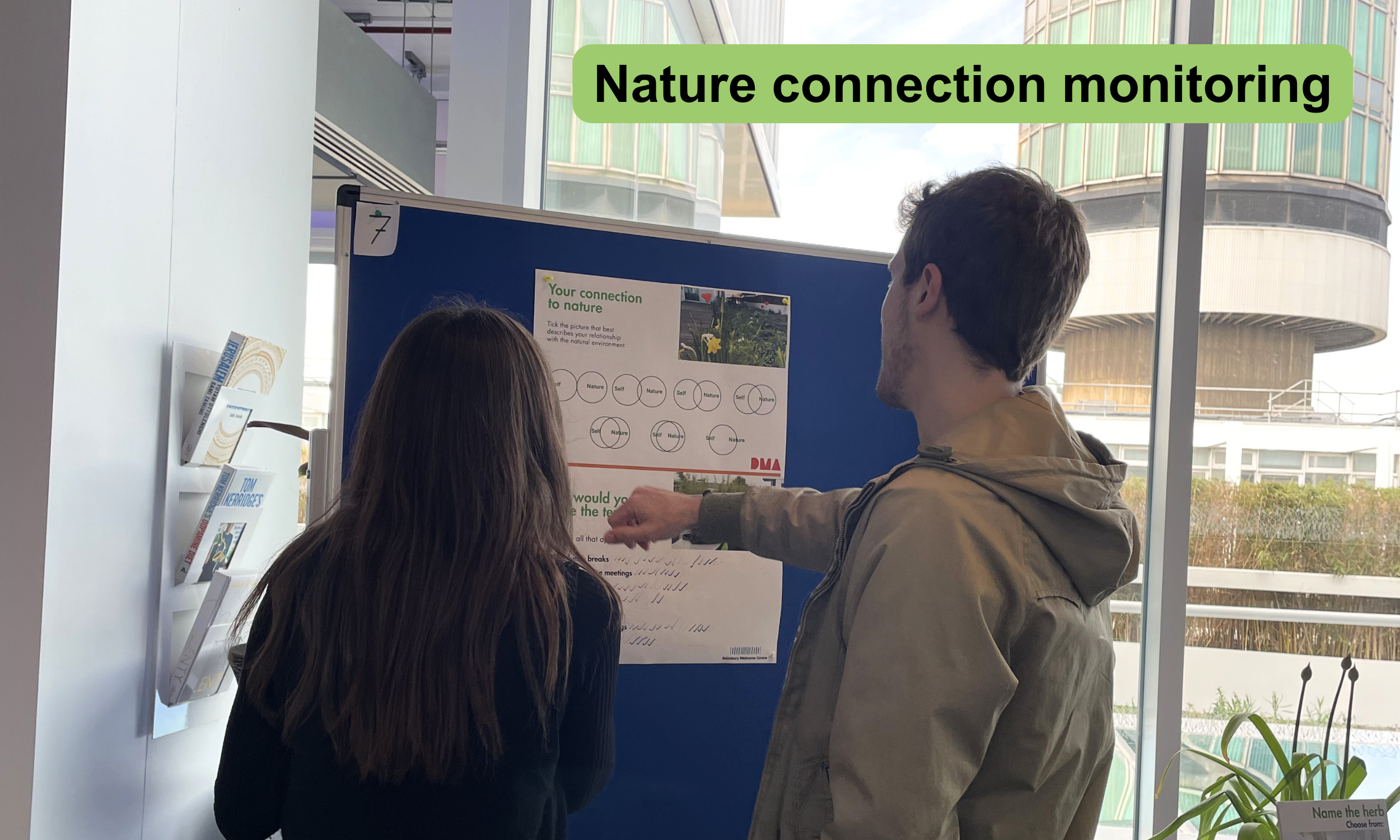
It starts with understanding how connected people feel to nature before nature activities start.

Taste, touch, smell are important when creating sensory gardens. Guessing the herb is fun and educational and informs our planting choices.
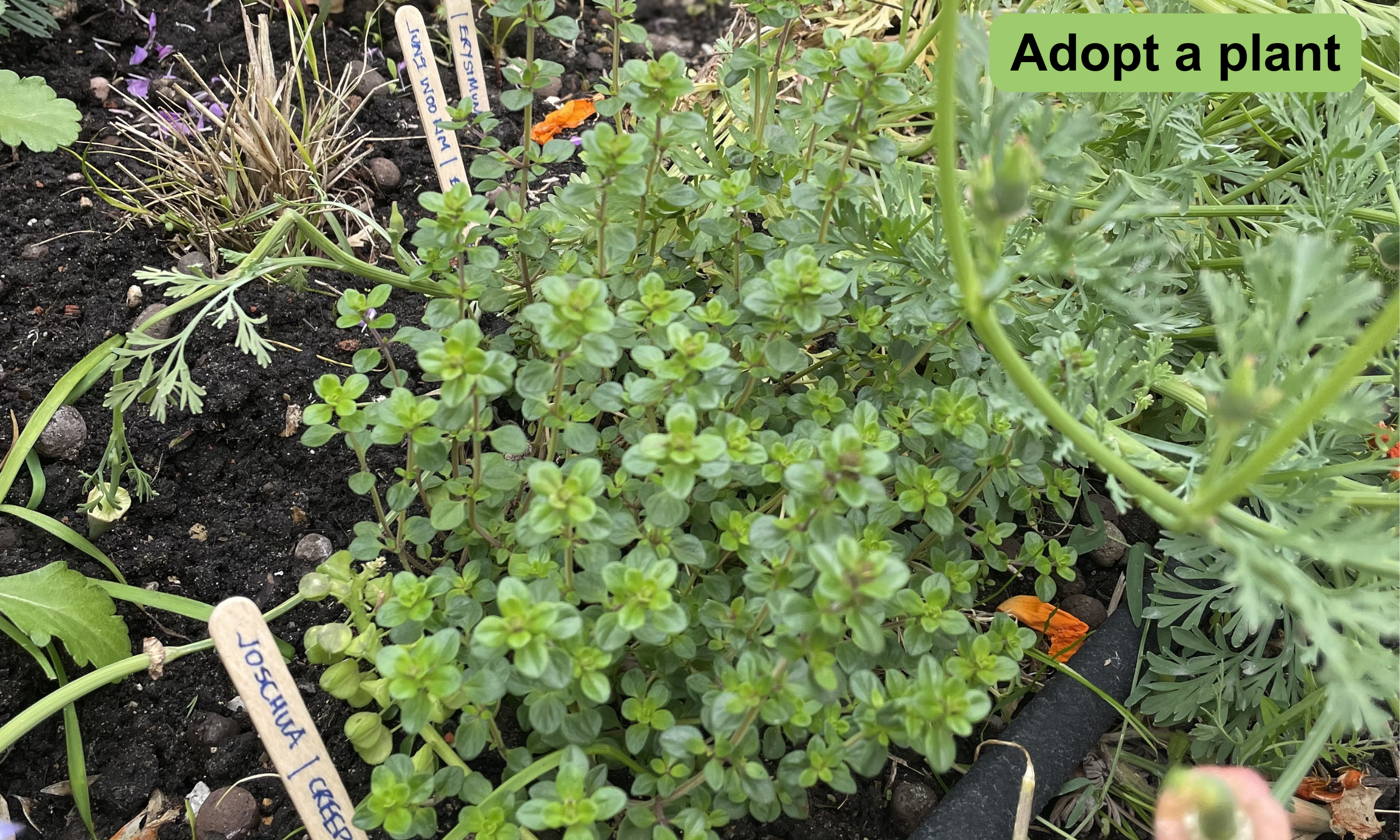
Adopting a plant taps into our natural connection to nature and fosters a sense of personal ownership. People visit the garden.

The sensory garden stimulates sight, sound, smell, taste and touch and it stops people in their tracks! It is also great for pollinators.
Kitchen herb garden
“We stopped ordering parsley and mint”
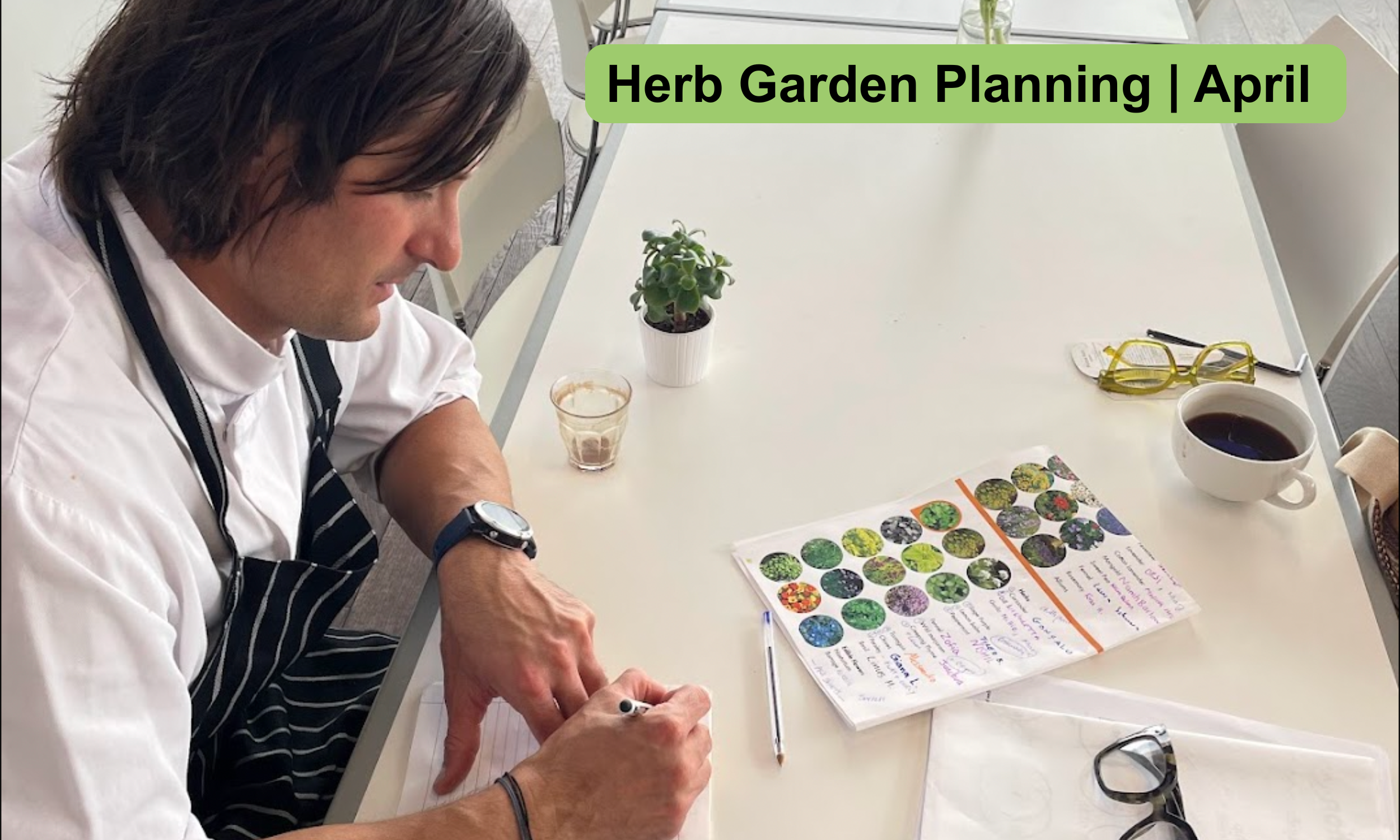
Planning a herb garden with the team is key to its success. We plan which herbs can be used in the daily salads and for flavoured water.
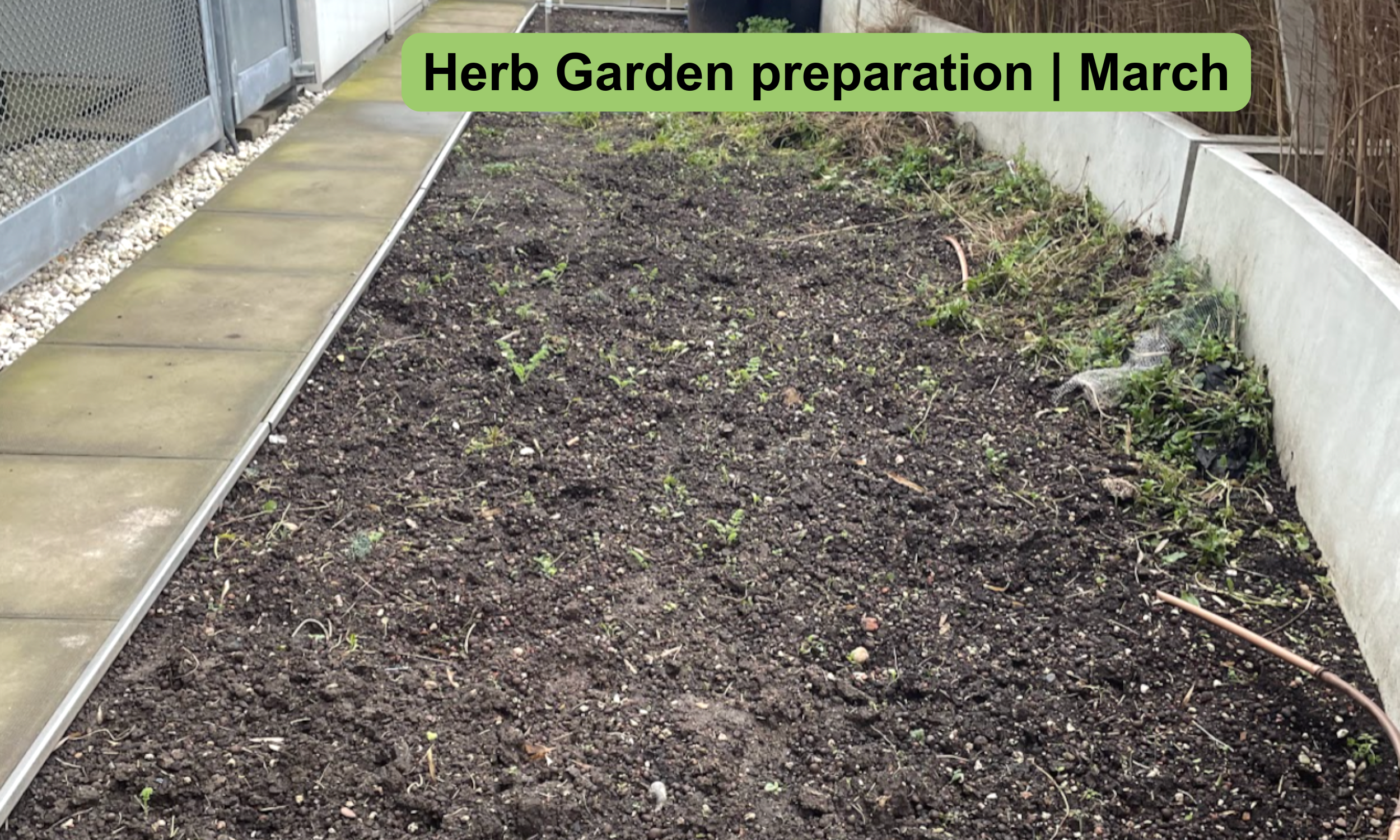
Preparation of the bed so the herbs can be planted in lines. It. makes them easy to identify and harvest by the catering team.
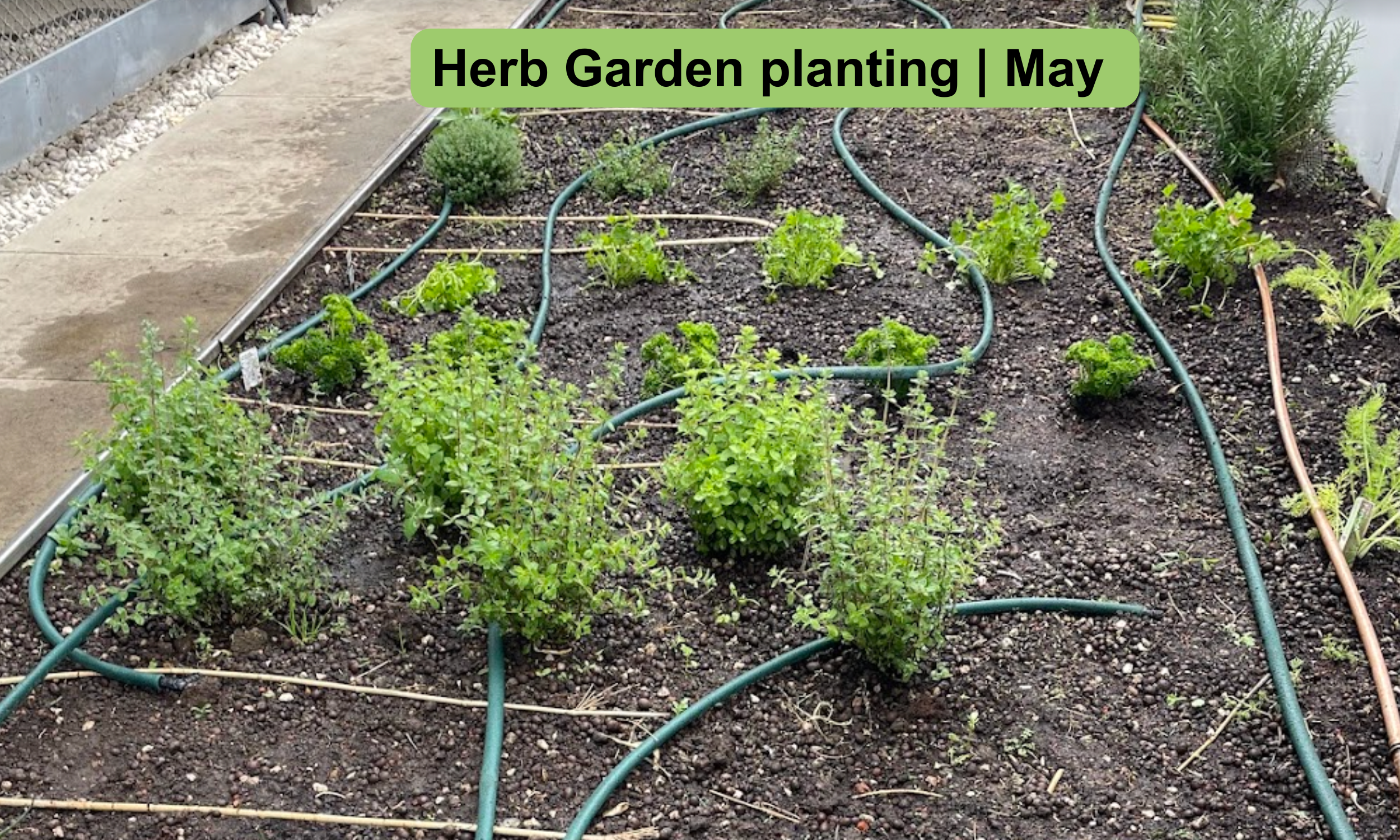
Planting starts with hardy herbs such as rosemary, sage, mint, thyme and oregano. Basil fennel and marigolds will be planted later.
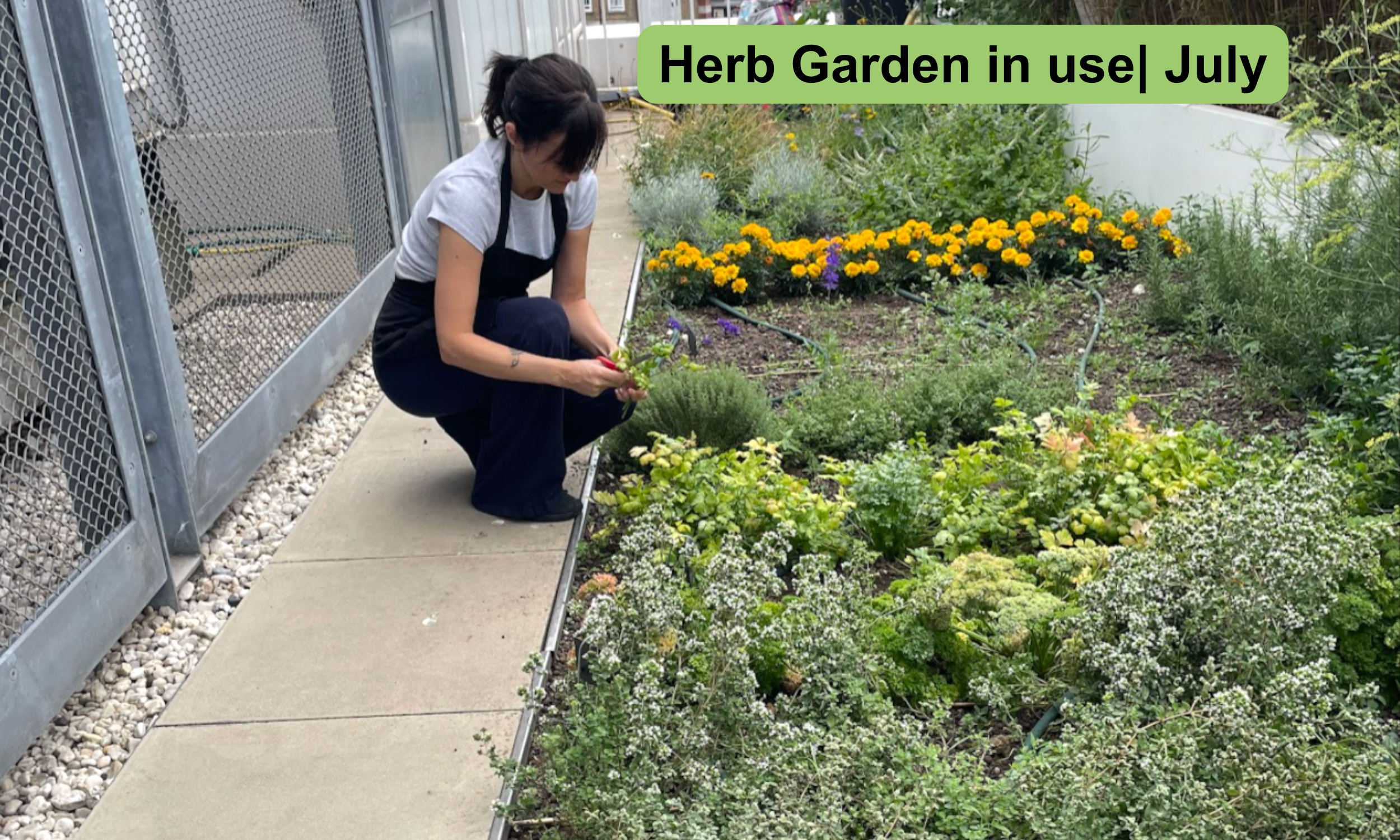
Herbs are picked daily by one of the catering team to be add to the lunchtime menu dishes.
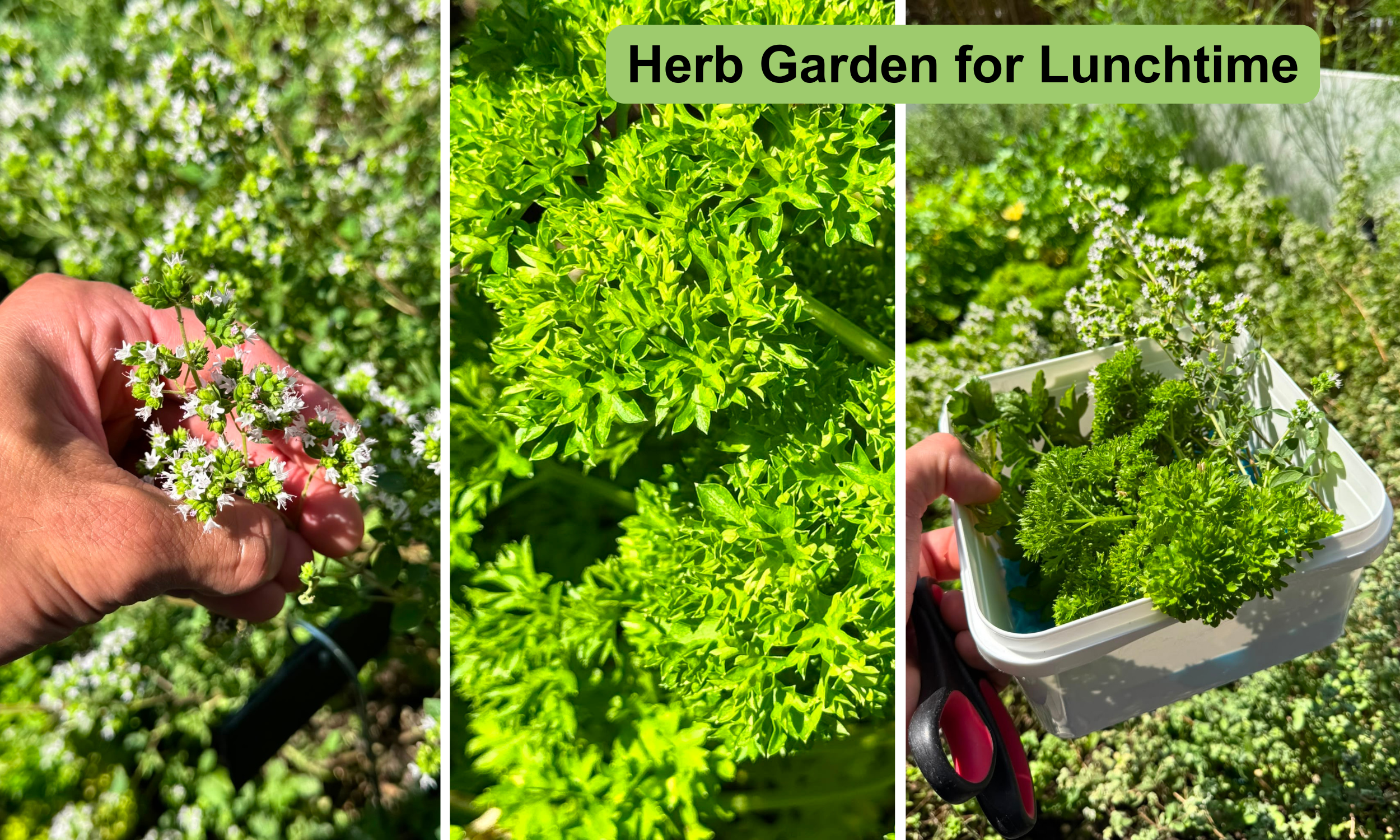
The chef picks sage and curly leaf parsley for a lunchtime salad which is served in the restaurant for employees.
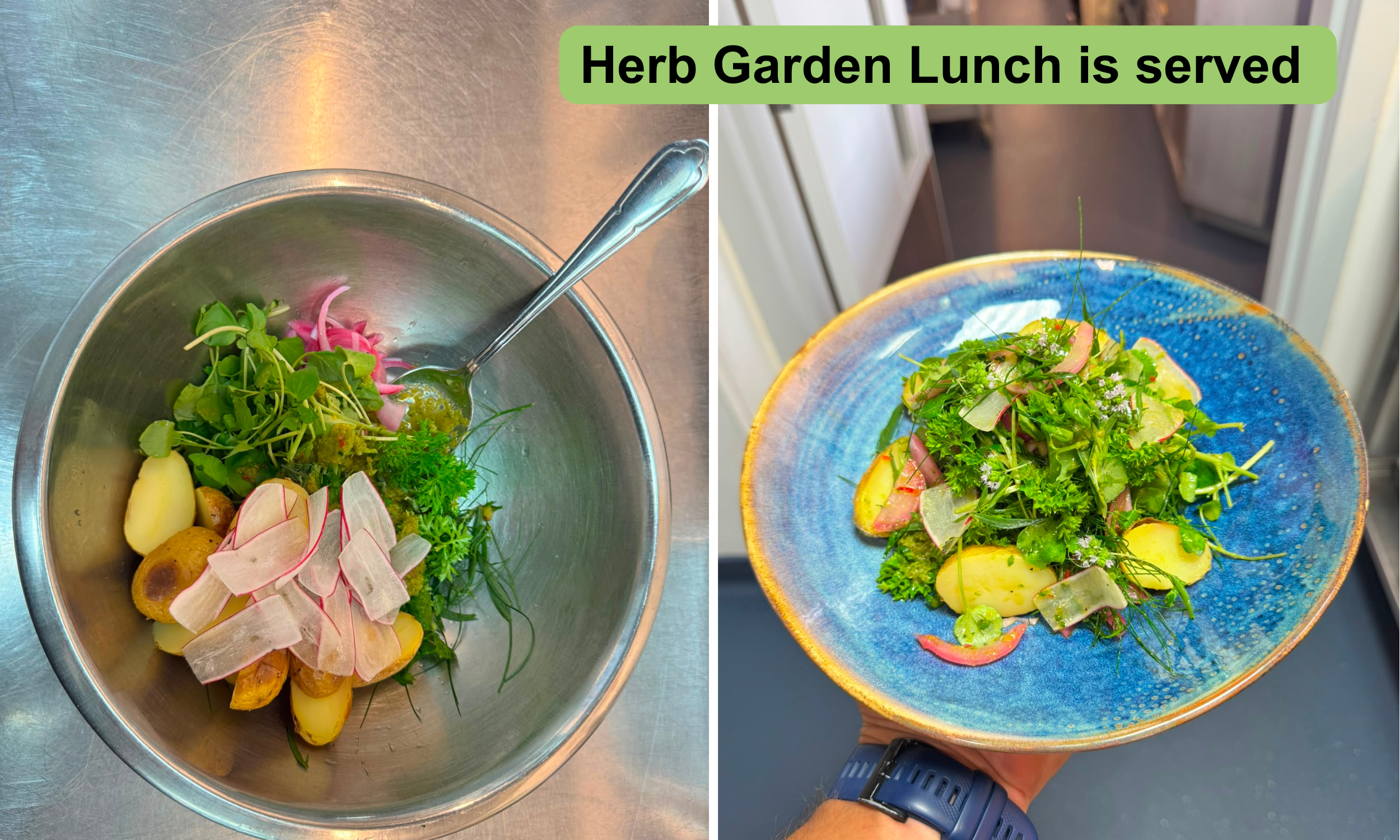
Added to the salad mix before serving in the restaurant. The chef no longer orders mint or thyme as it's all supplied by the herb garden.
Pollinators on the terrace
We planted. They came.
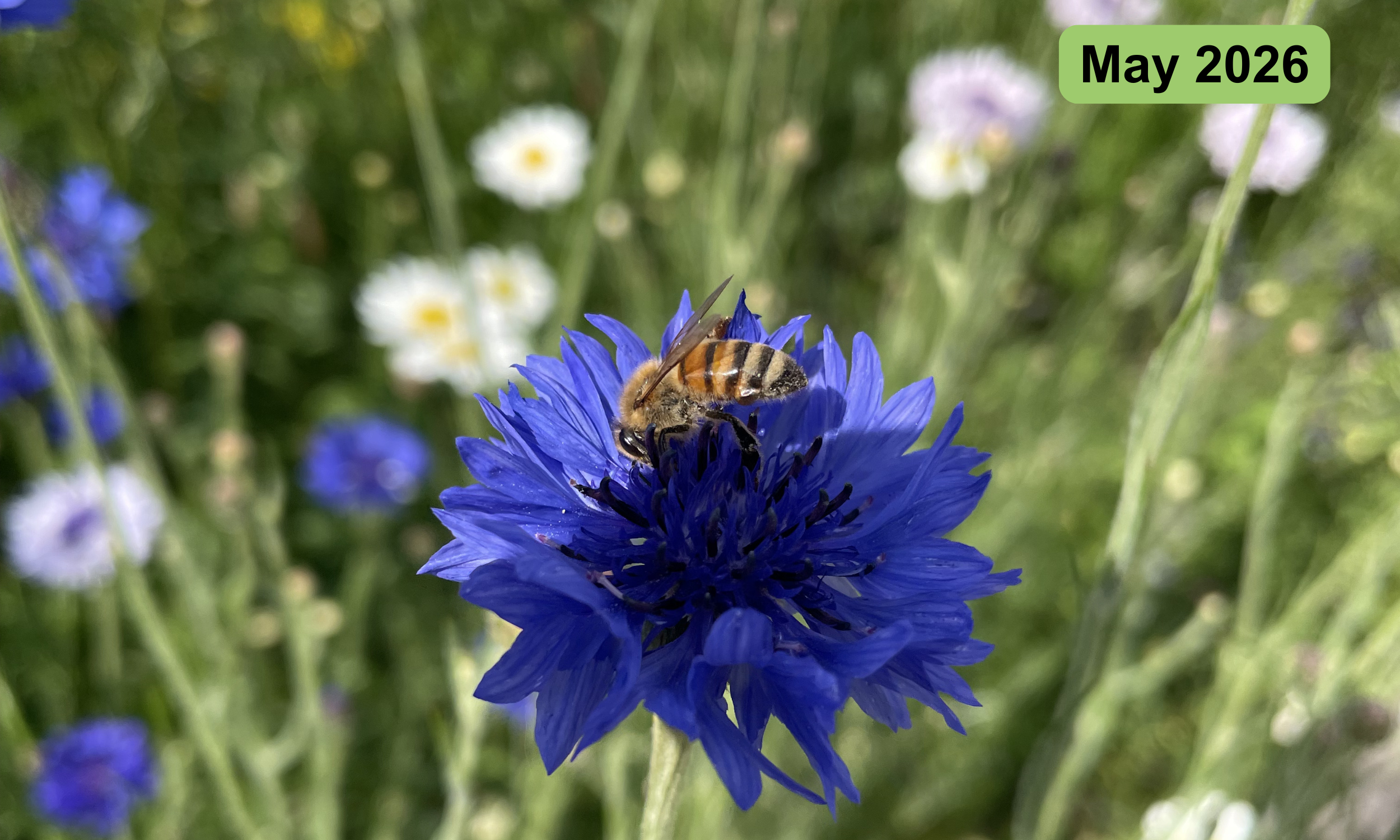
An early bee enjoying an early feed in May on a cornflower.
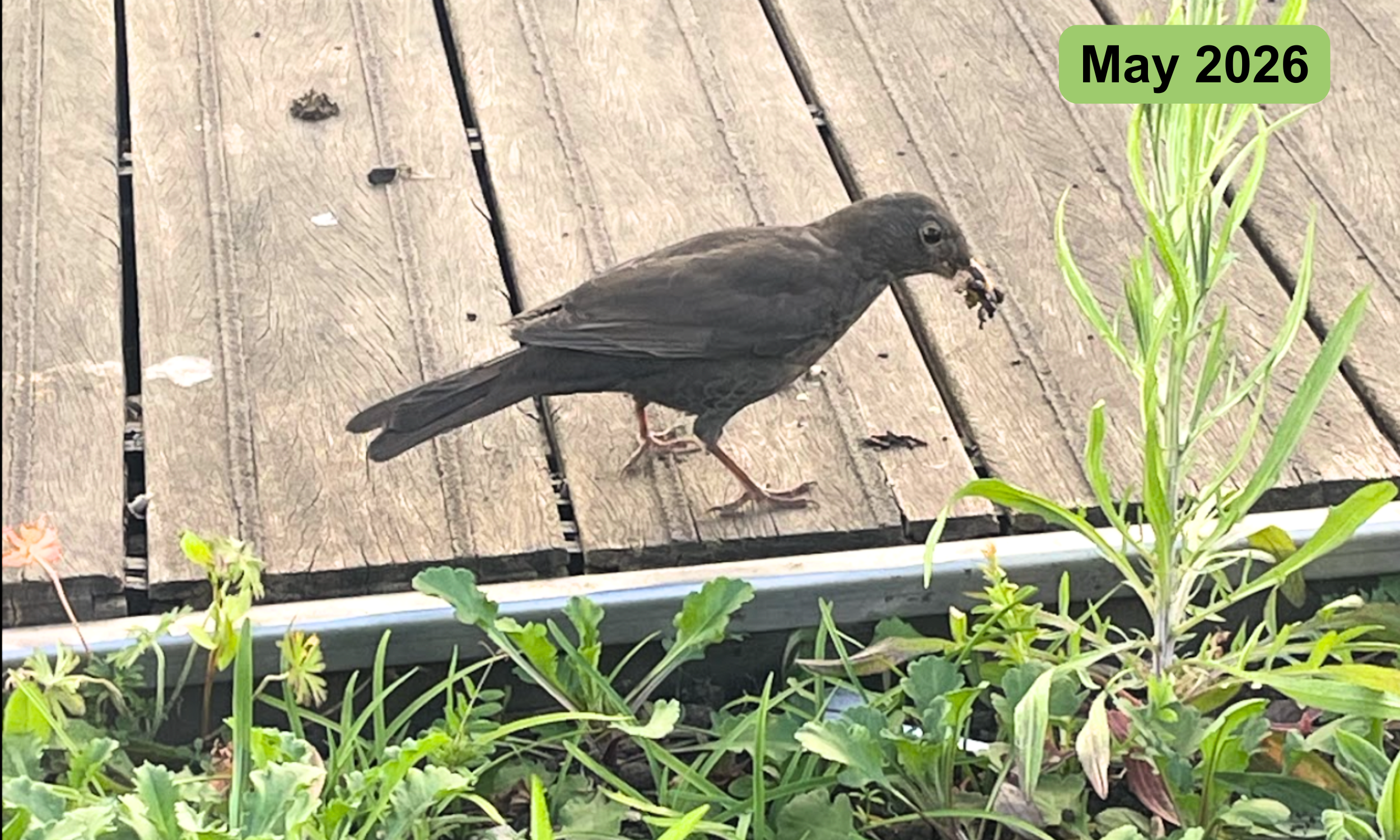
This little one never left my side throughout April and May. A female blackbird finding food to feed her little ones.
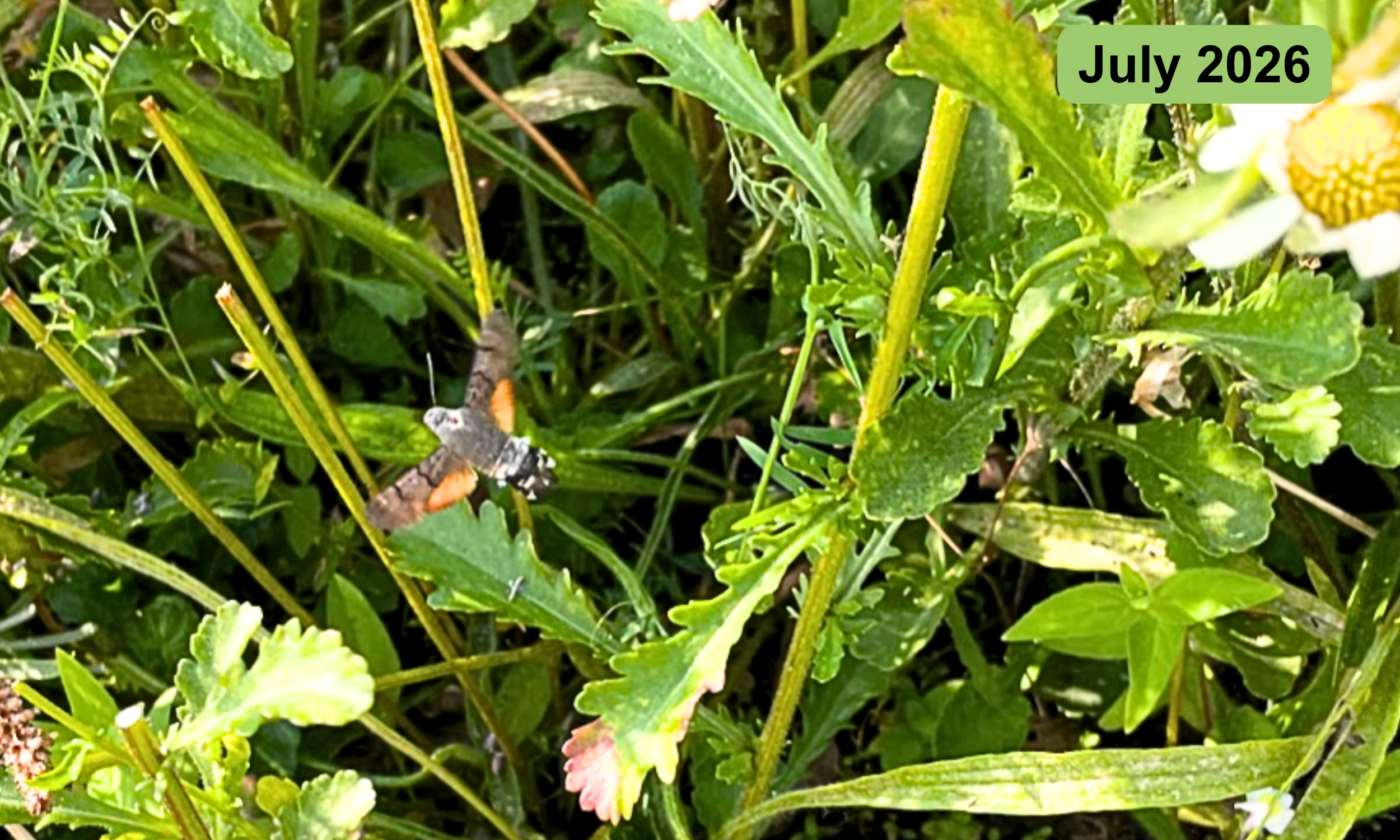
A hummingbird hawk moth which feed on the nectar of tube-shaped flowers. This one loves our newly planted buddleia.
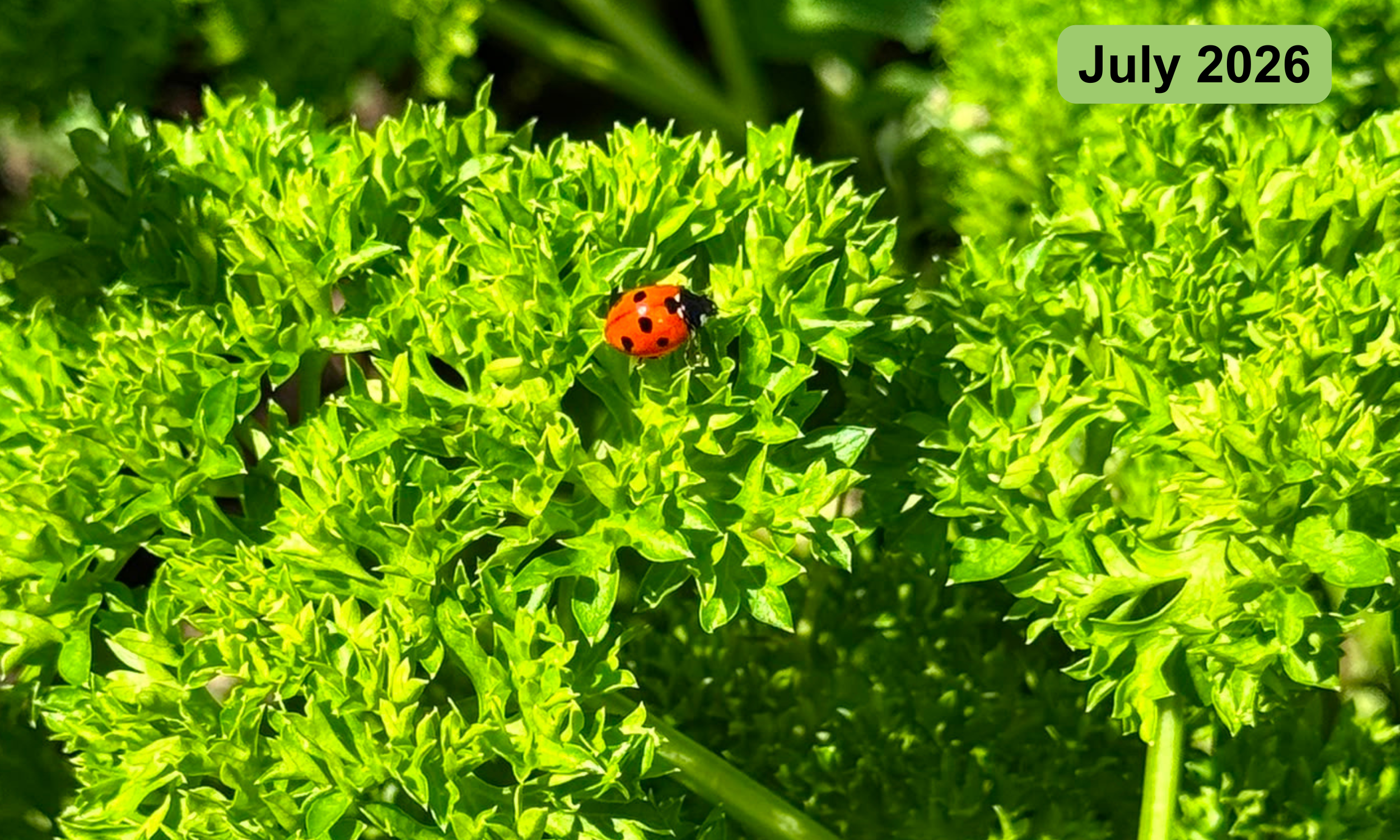
A 7-spot ladybird enjoying some curly-leaf parsley in the herb garden. They are our best friend as they eat insects that love to nibble on garden plants!
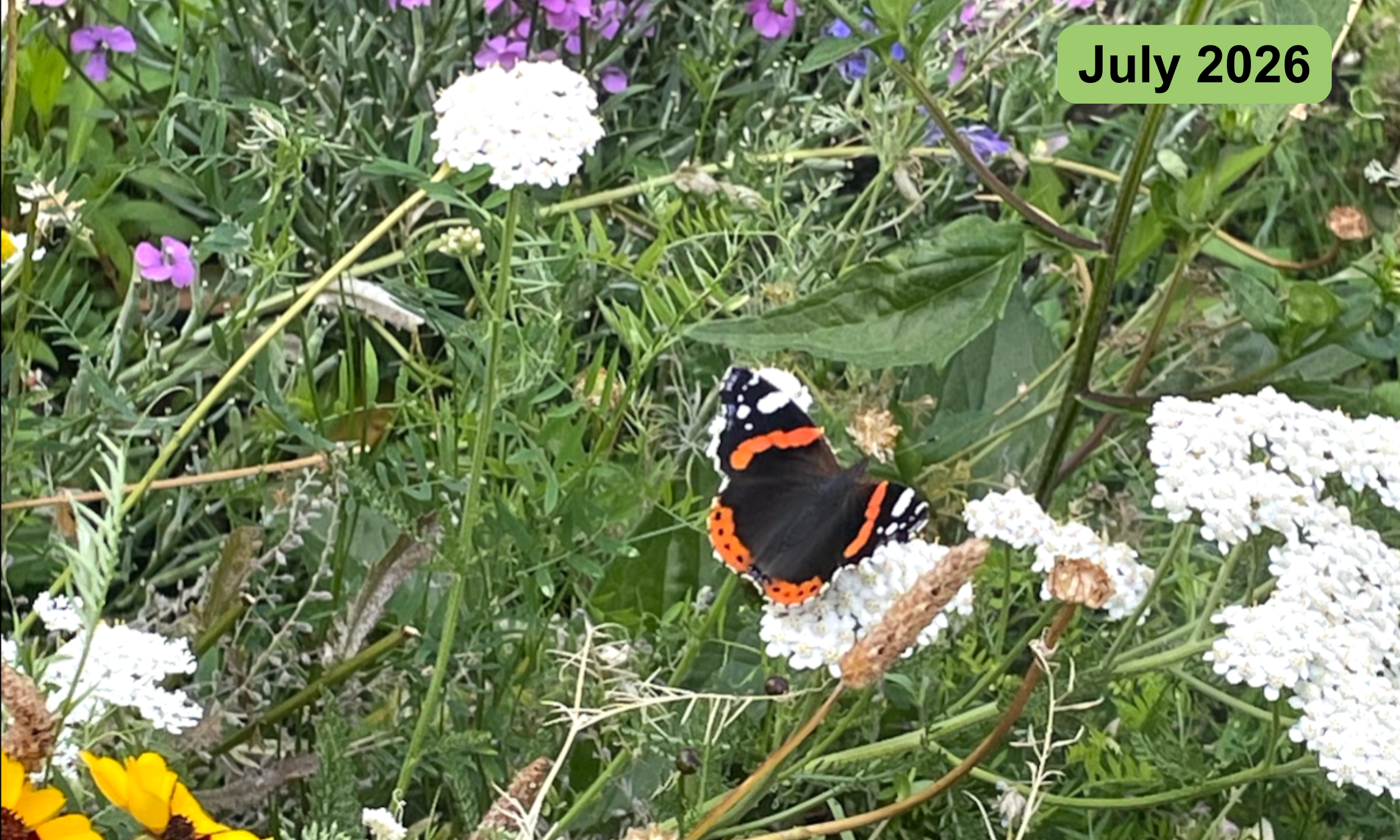
A red admiral visits the gardens. This is living proof that we have created a healthy local habitat, full of nectar flowers.